PolyCore siding: what sets a quality enclosed trailer apart
The composite siding that separates a quality enclosed trailer from a cheap one. Here is what PolyCore actually is, why it stays flat and dent-free where bare aluminum waves and dings, and whether it is worth paying for.
On this page, 4 sections
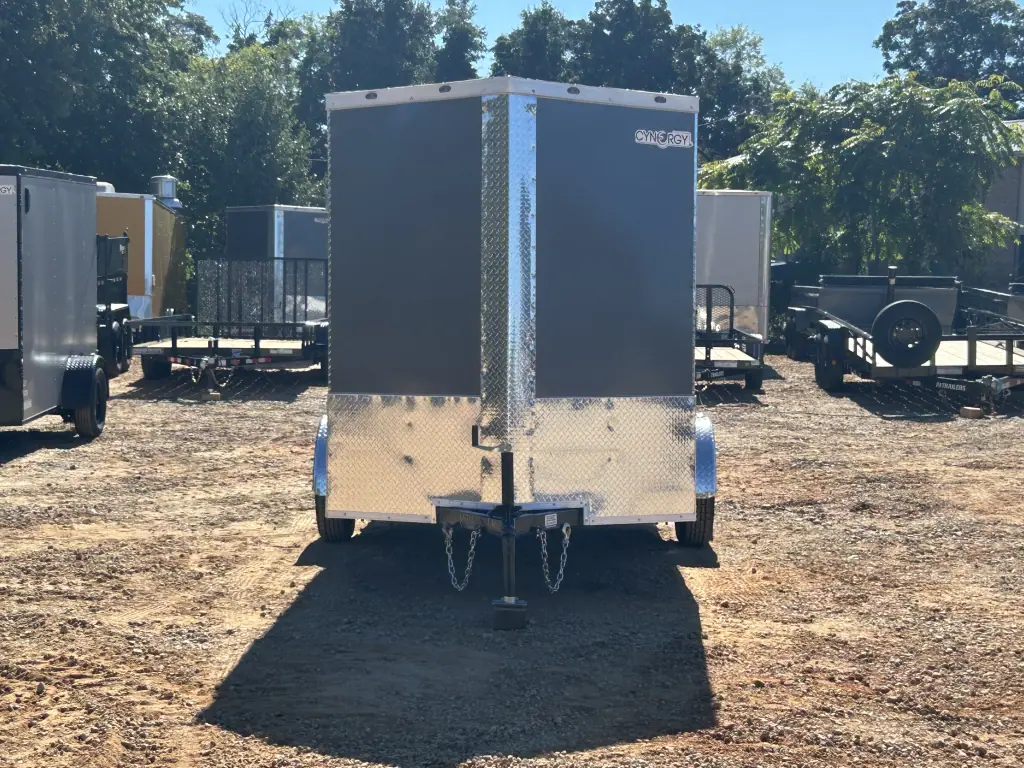
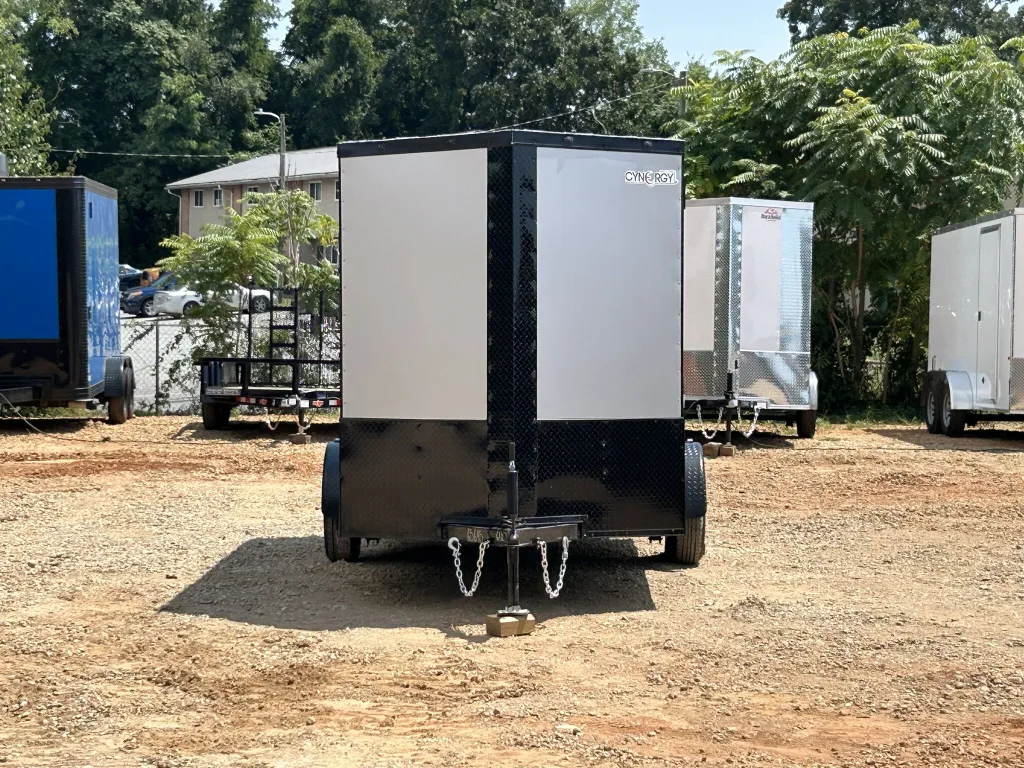
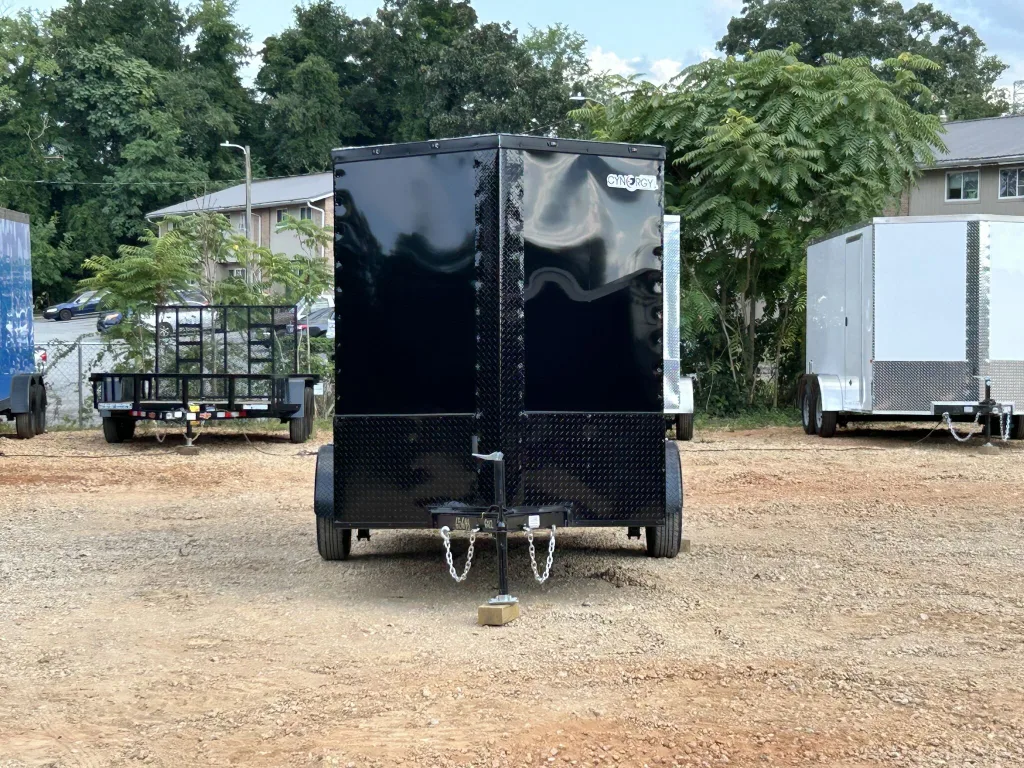
Walk the row of enclosed trailers on our lot and run your hand down the side of a couple of them. On a cheap, entry-level cargo trailer you'll feel the seams: thin aluminum sheets lapped and riveted together, a little wavy where the sun hits them. Stop at one of our units built with PolyCore siding and it's a different animal. One smooth wall, no rivet lines, no ripples. That's the difference between a cheap enclosed trailer and a quality one, and it's worth understanding before you buy.
What PolyCore actually is
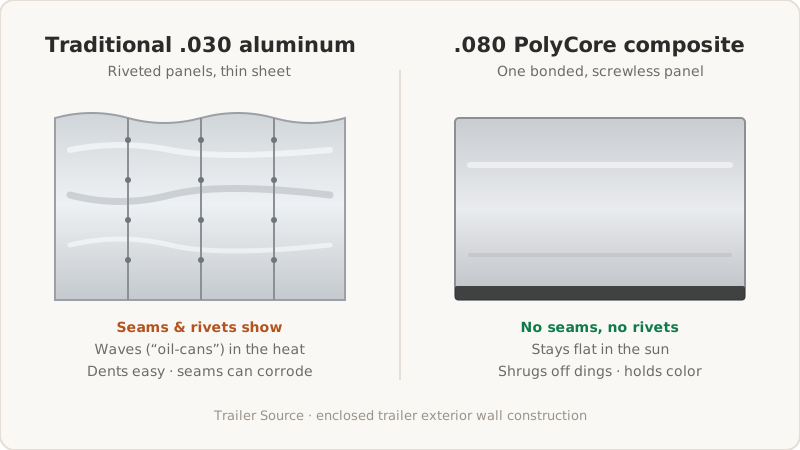
A cheap cargo trailer is skinned in bare aluminum sheet, usually around .030 of an inch thick, screwed or riveted onto the frame in panels. It's cheap, it's light, and it does the job. It also dents if you look at it wrong, and it "oil-cans," which is that waviness you see rippling down the side of a box trailer on a hot day.
PolyCore is a composite panel instead of a bare sheet. Think of a polymer core bonded between two thin, painted skins, pressed into one rigid panel and fixed to the trailer as large sections with no exposed rivets. It's a spec on the builder's order sheet, usually listed as ".080 Upgraded PolyCore Siding," and that .080 is better than twice the thickness of the .030 aluminum it replaces (you can see the difference in the diagram up top: seams and rivets on the bare sheet, one smooth wall on the composite). It comes from the factory as part of how the trailer is built, not something added on afterward. On our Rock Solid Cargo enclosed units it's usually paired as a package, something like "Silver, Blackout Trim," where the composite wall comes with darkened trim and hardware for a clean, finished look.
Why it matters

The look is the first thing people notice. No seams, no rivet heads marching down the side, no ripples in the heat. It reads like a finished product instead of a box, which matters a lot when the trailer is rolling advertising for your business.
Then there's the toughness. That thicker composite panel shrugs off the dings and dents that leave a bare aluminum wall looking beat up after one season: a stray shopping cart, a low branch, a strap buckle swinging into the side. It doesn't oil-can, so it stays flat and true. And because it's a bonded panel and not aluminum sheet screwed to a steel frame, you're not fighting the corrosion that can creep in where different metals meet at every seam and fastener. It holds its color and wipes down easy, and graphics and lettering lay down better on a smooth, seamless wall than they ever will over a field of rivets. Manufacturers usually stand behind the composite skin with a better warranty than they'll put on bare aluminum, too.
The honest tradeoffs
It costs more. It's a pricier spec, so that cost is baked into the price of the trailer, and on a small utility-grade cargo trailer that money might be better spent elsewhere. Repair is the other thing to think through, and it's also where our shop comes in. Ding a bare aluminum panel badly and a shop can pop the rivets, screw a fresh sheet on, and you're back in business cheap. A bonded composite panel is a bigger job: it means replacing a whole bonded section, which is more labor and more material. In practice it takes a lot more to hurt a PolyCore wall in the first place, but when it does happen, bring it to our shop. It isn't a twenty-minute aluminum patch, but we can repair or replace the damaged panel and get you back on the road.
Who should buy it
If the trailer is a work truck for your business, if it's going to live outside and get used hard, or if you just want it to still look sharp in ten years, PolyCore earns its keep. If it's a light-duty trailer that'll see the odd weekend and sit in the garage between, the standard aluminum is honestly fine, and you can put the difference toward a nicer floor or better tires. The best way to decide is to feel it yourself. Come by and we'll walk you down the row so you can put your hand on a bare aluminum wall and a PolyCore wall back to back.
Don't see one on the lot spec'd the way you want? We can special-order an enclosed trailer built with PolyCore siding from the factory. Have a look at our enclosed trailer inventory, or come see us in Greenville right off I-85 and we'll show you both.
Ready to shop, or want us to handle it?
Come see us here in Greenville, browse what's on the lot right now, or let our service shop take care of the work.